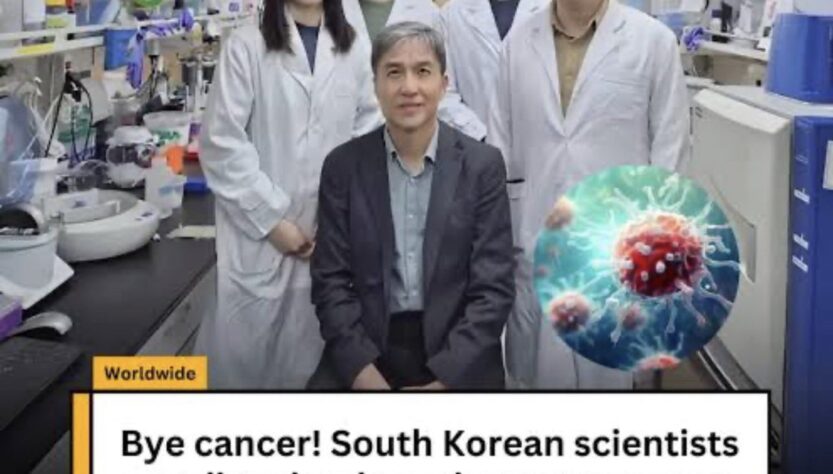
🚨 Mind-Blowing Cancer Breakthrough: Korean Scientists Just Found a Way to Turn Cancer Cells Back to NORMAL — Without Killing Them! 🔥
— GP Q (@argosaki) March 27, 2026
What if we could treat cancer by reprogramming tumor cells into healthy ones instead of destroying everything in their path?
KAIST researchers… pic.twitter.com/pXuSXDYYgi
Overview
Researchers at the Korea Advanced Institute of Science and Technology (KAIST) have developed a promising approach to treat colorectal cancer by reprogramming malignant cells back into normal-like healthy intestinal cells, rather than destroying them. This method, detailed in a peer-reviewed study, represents an early but significant step toward “cancer reversion” therapies that could reduce the side effects and resistance issues common in traditional treatments like chemotherapy.
Research Approach and Technology
The team, led by Professor Kwang-Hyun Cho from the Department of Bio and Brain Engineering, created a computational framework called BENEIN. This tool analyzes gene regulatory networks using single-cell transcriptome data from normal colon cells to identify “master regulators” that control cell differentiation and fate. By simulating these networks like a digital twin, researchers pinpointed three key genes—MYB, HDAC2, and FOXA2—as critical switches maintaining the cancerous state. Inhibiting these regulators simultaneously triggers the cancer cells to differentiate into mature, normal-like enterocytes (intestinal cells), suppressing proliferation and malignant traits without killing the cells.
Key Findings
Experiments on human colorectal cancer cell lines and mouse models showed successful reversion: the treated cells regained normal characteristics, stopped uncontrolled growth, and exhibited reduced malignancy. The approach inactivates pathways like MYC and WNT, which drive cancer progression. A related follow-up study by the same group further explored critical transition points in tumorigenesis, identifying molecular switches that could revert cells at early stages of transformation.
Implications and Potential Advantages
This reversion strategy differs from conventional therapies by focusing on restoring normal cell behavior instead of broad cell destruction. Potential benefits include fewer side effects, lower risk of resistance, and reduced recurrence. The concept could extend beyond colon cancer to other types if the underlying gene network principles apply. Professor Cho has highlighted the astonishing nature of converting cancer cells back to normal, emphasizing its potential as a foundational technology for safer treatments.
Current Status and Next Steps
The primary study was published in Advanced Science in December 2024. The technology has been transferred to biorevert Inc., a KAIST-affiliated startup founded to develop practical reversion therapies, including collaborations for new cancer treatments. This remains preclinical research—validated in lab and animal models but not yet tested in human clinical trials. Further work is needed on safety, efficacy across cancer types, and drug development to target these regulators.
Conclusion
The KAIST team’s work offers an exciting proof-of-concept for reprogramming cancer cells, shifting the paradigm from killing tumors to normalizing them. While still in early stages, it sparks hope for more precise and less toxic cancer therapies in the future. Ongoing research and commercialization efforts will determine its clinical impact.